In brief
You do not need to understand APIs, real-time systems, or mobile development to begin. A useful software idea can start with a problem, a sketch, or an experience you wish existed.One of the most common questions I hear from product founders is, “Is this even possible with software?”
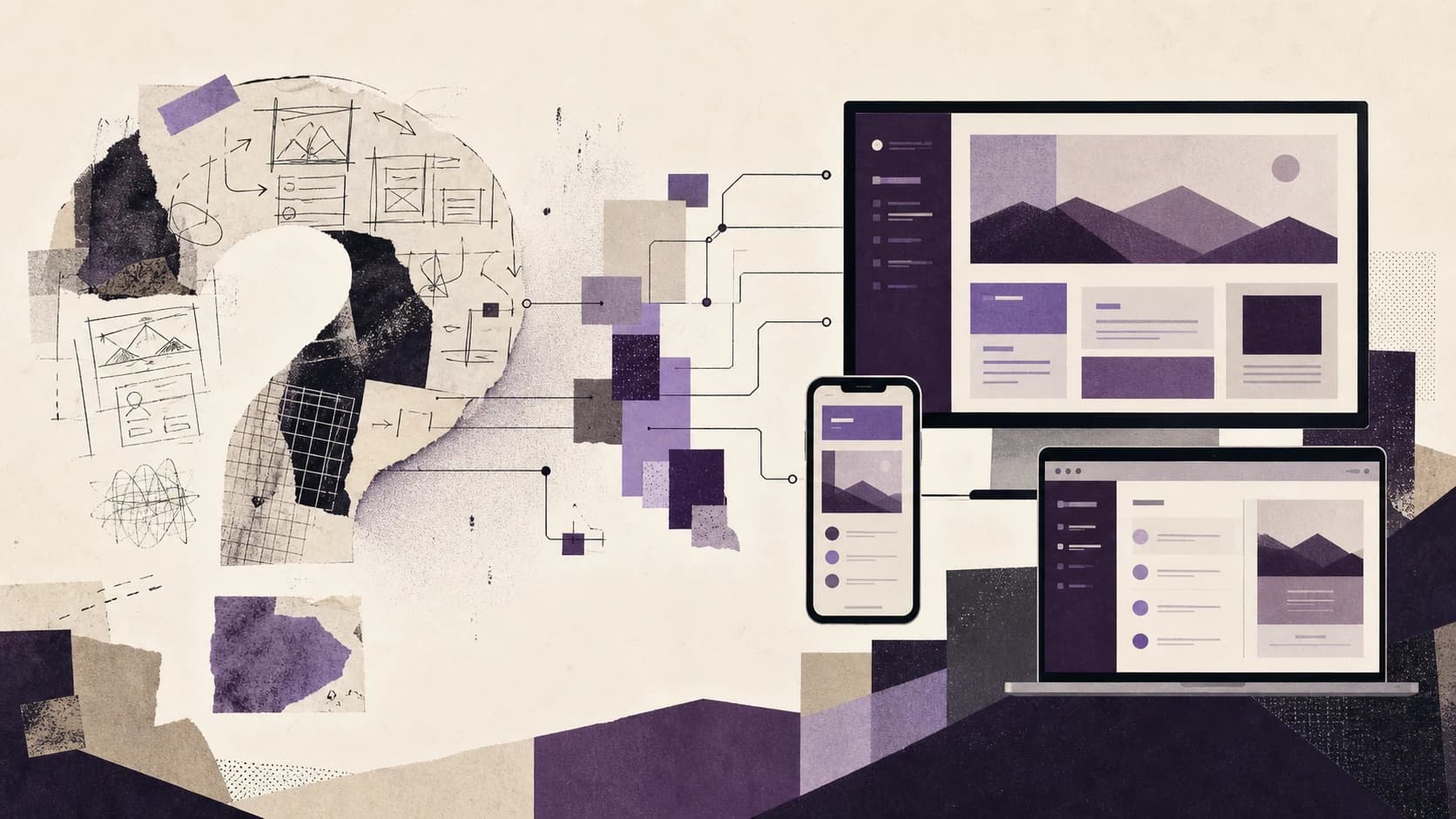
Often, the idea is clear in their head. They can picture how it would feel or explain the problem it would solve, but they cannot see how a phone, website, shared screen, or outside service could work together to create it. The technical path is hidden, so the entire idea starts to feel unrealistic.
From my side of the conversation, it looks different. I hear a problem to understand and a set of pieces to work through. An API might connect the product to another service. A real-time system might keep several devices in sync. A mobile app might turn an individual activity into a shared experience. Thoughtful product design can make all of that feel natural to the person using it.
This does not make every idea easy or practical. Scope, budget, timing, privacy, platform rules, and technical limitations all matter. It does mean you can begin with the experience you care about before you know how the technology works.
Is my app idea actually possible to build?
Most ideas cannot be answered with a useful yes or no until someone understands what “possible” means for that product.
A feature may be technically achievable but too expensive for the first version. A real-time interaction may work well for fifteen people and require a different architecture for thousands. An integration may depend on whether another service provides access to the necessary data. A product that handles personal information may need additional privacy and security work.
A good discovery process separates the core idea from the implementation assumptions around it. What experience matters most? Which part needs to happen immediately? What information moves between people or systems? What would make the first version useful?
Once those questions are clear, a development partner can identify the practical options and explain the tradeoffs. Sometimes the original concept is sound. Sometimes a smaller or slightly different approach preserves the experience while making the first release much more realistic.
You do not need to rule out your idea because you cannot answer the technical questions yourself. Answer the questions only you can answer: who is this for, what should they be able to do, and why would it matter to them?
What can modern software make possible?
Modern products rarely live on one screen. A mobile app can communicate with a shared display, update other players in real time, retrieve a growing content library, remember progress, and personalize the experience for each person.
APIs allow one product to exchange information with another system when access is available. Integrations can reduce repeated entry and bring separate parts of an experience together. Real-time technology can keep connected users looking at the same changing state. Product design turns those underlying capabilities into actions that make sense without requiring the user to understand any of them.
These are building materials, not a reason to add complexity. The useful question is how they can support the experience.
If a group activity feels limited because only a few people can participate, connected devices may expand it. If progress disappears at the end of every session, accounts and stored data may give people a reason to return. If the most exciting part of an experience is hard for everyone to see, a shared display can bring it into the room.
Software becomes interesting when it changes what people can do together, not when it simply moves an existing process onto a screen.
How can a simple app concept become a connected product?
A founder once came to us with a social, phrase-based party-game concept. The idea had worked in a more limited form, and the founder wanted to digitize and expand it. They were not sure a fully digital version would work.
We built a working app from start to finish in two days.
That timeline reflects this particular focused project and should not be treated as a general delivery promise. The useful lesson is what the digital version allowed the concept to become.
More people could play together, with approximately 15 live connected players in a session. A real-time leaderboard could appear on a television or other shared display, giving the room a common focal point. The content library could grow to roughly 2,500 phrase packs instead of being limited by a fixed physical set.
Players could also have avatars and customization, earn badges, build streaks, and return to leaderboards over time. Their relationship with the product continued between games rather than resetting completely whenever a session ended.
Those details mattered because they changed the character of the experience. It became more shared, visual, personalized, scalable, and replayable. New content and ongoing progress gave it room to stay alive over time.
The founder did not need to arrive with a plan for real-time connections or shared-screen architecture. They needed to explain the social experience they wanted people to have. The technical design followed from that.
How do APIs and real-time features change an app idea?
An app idea often begins as a picture of what one person does on one device. Thinking about connections can reveal a larger product.
Real-time features allow multiple people to participate in the same changing experience. That may mean a game session, a collaborative workspace, a live service update, or a shared operational view. The design has to account for timing, connection quality, permissions, and what happens when someone drops out, so the details still require careful engineering.
APIs and integrations can connect an app to information or actions that already exist elsewhere. Whether a particular connection is possible depends on what the outside service makes available, how reliable that access is, and what its rules allow.
Persistent data gives a product memory. It can preserve progress, preferences, history, and relationships between sessions. That creates opportunities for personalization and repeat use, along with real responsibilities for privacy, security, and data management.
None of these capabilities belongs in a product by default. Each one should earn its place by improving the core experience.
What should I bring to an app discovery call?
Bring whatever version of the idea you have.
It might be a rough concept you have explained to friends, a napkin sketch, an operational problem, a desired feeling, or an experience you wish existed. You may have a detailed feature list. You may have one sentence and a strong sense that something should work better.
All of those are valid starting points.
The job of discovery is to translate that input into a useful system. That involves identifying who the product serves, what they need to accomplish, which moments carry the most value, and what constraints will shape the build.
If you have reference products, examples can help explain an interaction or feeling. If you have already tested the idea manually, describe what happened. If privacy, timing, or a particular device matters, bring that up early. You are providing the lived context while the development partner maps the technical path.
You should leave discovery with a clearer view of the product, including the parts that are straightforward, the parts that need testing, and the choices that affect cost or complexity.
How can I validate an app concept before building the full product?
Start by identifying the smallest experience that would tell you something meaningful.
For the party-game concept, the key question was whether people could participate together in a fully digital version and whether the shared experience still felt engaging. There was no need to settle every future feature before answering that.
Your idea may have a different critical question. Can users complete the main task? Will two systems exchange the necessary information? Does the live interaction feel responsive enough? Do people understand the product without a long explanation?
A focused prototype can turn those questions into something you can use and evaluate. The goal is to learn where the idea is strong, where it needs adjustment, and whether a larger investment makes sense. A prototype cannot remove every product or market risk, but it can replace some of the guesswork with direct experience.
If you are not sure what workflow to prototype first, the free 10% Test helps you map how the work happens today, choose the core workflow, and define the improvement worth measuring before a full build.
If your concept is more defined and you want help translating it into a product, book a discovery call.
You do not need to begin with the technical vocabulary. Begin with the experience, problem, or possibility you care about. From there, the right conversation can show you what software may realistically make possible.