Operations Web Applications
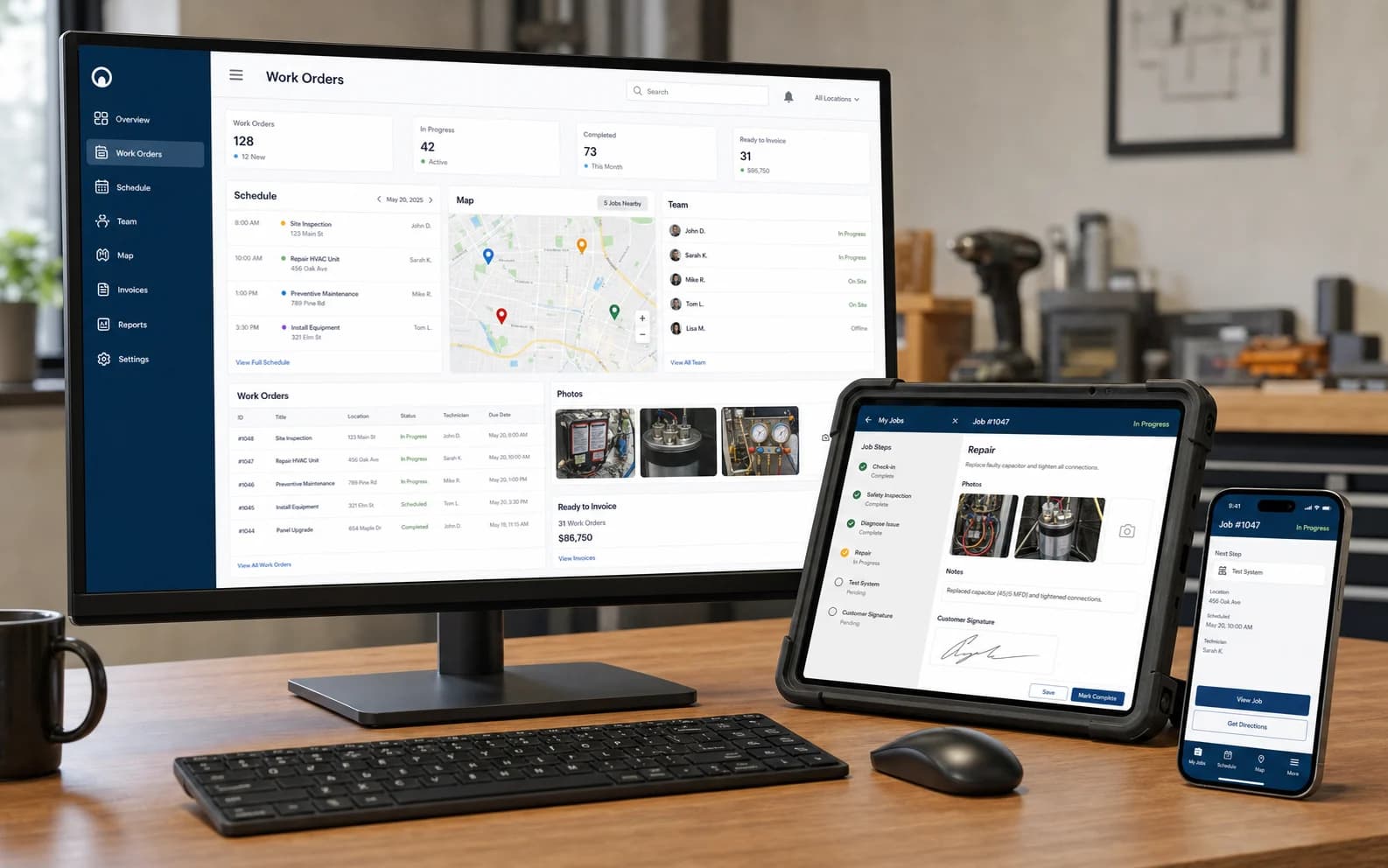
Role-aware custom web applications that put scheduling, status, approvals, proof, and decisions in one dependable system.
Replace spreadsheets, repeated entry, aging systems, and disconnected handoffs with secure custom software shaped around the way your business actually operates.
10+ yearsbuilding software
60+ projectsdelivered
Utahfounded & headquartered
5.0 / 5stars on Google
Trusted by businesses like

We design the operating path first, then build the web applications, mobile tools, integrations, and reporting needed to support it.
Role-aware custom web applications that put scheduling, status, approvals, proof, and decisions in one dependable system.
Operational software for assigning work, coordinating teams, managing availability, and keeping the next handoff visible.
Mobile-friendly workflows for crews and managers to capture status, photos, issues, signatures, and completion details.
A responsible path away from aging databases, paper processes, or brittle internal tools without losing the workflow knowledge inside them.
Connections between the software you still need so staff no longer re-enter the same information or reconcile competing records.
Dashboards and report-ready records that show owners what is happening without another spreadsheet or manual status meeting.
Custom operations software is most useful when the workflow is understood, the manual cost is visible, and ownership creates a durable advantage.
Service, construction, healthcare, property, logistics, and other teams whose daily work now spans too many calls, texts, forms, and spreadsheets.
Leaders who understand where work slows down, can involve the people closest to it, and want one accountable partner through delivery.
The process makes one important workflow visible before anyone prices or builds the full operating system.
Trace the people, tools, decisions, exceptions, and handoffs behind one operating workflow, then agree on the result that would make it meaningfully better.
Build that operating path as a focused working prototype in one week using staged representative data.
Let the people closest to the work use it and measure time saved, duplicate entry removed, handoffs clarified, or capacity created.
Turn the parts that create meaningful improvement into a fixed-price production system with the required roles, integrations, reliability, and ownership.
The useful system is not the one with the most features. It is the one that makes the next action clear, survives daily use, and stays accountable to the people running the business.
Jake owns problem framing, prototyping, engineering direction, and delivery from the first conversation through handoff.
Roles, permissions, validation, failure states, data history, and operational edge cases are treated as part of the product, not cleanup work.
The build ends with documented software, clear account responsibilities, and custom code and deliverables you own once paid.
From operation map to owned software
One weekfirst working prototype
$2,500flat-rate prototype
8–16 weekstypical approved build
30 dayspost-launch support
Map how the work happens with Jake, choose one workflow to prototype, and define the improvement your team will measure before anything expands.
Book a Discovery CallReal engagements where a visible operating path replaced repeated manual work.
Custom operations software is a web or mobile system built around a company’s specific internal workflow. It can coordinate roles, scheduling, field work, approvals, proof, billing gates, reporting, and integrations when a general-purpose product no longer fits.
The first question is not whether to replace every spreadsheet. It is which workflow creates enough repeated entry, delay, or coordination cost to justify a focused prototype. If the prototype produces meaningful improvement, that gives the full build a clear starting point. If an existing product already covers the workflow, we will say so.
Yes, when the existing workflow and data can be responsibly understood and migrated. The prototype and build brief identify what should remain, what should change, and how to avoid disrupting the operation during transition.
Usually, when those tools provide appropriate APIs, exports, or other supported integration paths. Integration feasibility and responsibility are confirmed before the build is priced.
The first working prototype is delivered in one week. Most approved production builds take 8–16 weeks, depending on the locked workflow, integrations, roles, data, and completion criteria.
Yes. Once paid, the client owns the custom code and deliverables, subject to third-party licenses. Hosting, vendor accounts, documentation, and ongoing support responsibilities are made clear during handoff.